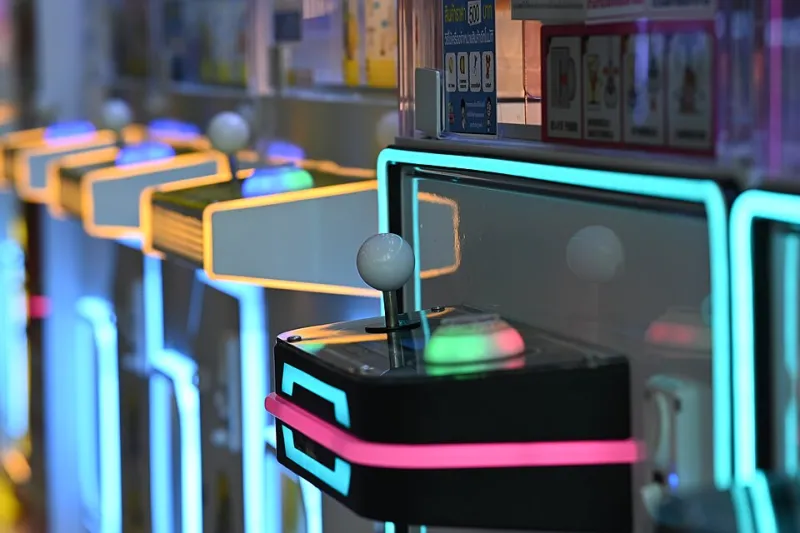
Your Brain Is the Canvas: The Artists Rewiring Perception One Sense at a Time

Photo by Photo by Alex Wolowiecki on Unsplash on Unsplash
There's a moment — if you've ever stood inside one of those installations where the bass from a speaker vibrates your sternum while shifting light pools around your feet — where you genuinely can't tell if you're hearing the color or seeing the sound. That confusion? That's not a bug. That's the whole mission.
A growing constellation of experimental artists, sound designers, and multimedia weirdos are deliberately engineering those scrambled-signal moments. They're drawing from synesthesia — a neurological phenomenon where one sensory input involuntarily triggers another — not because they all experience it themselves, but because they've figured out it's one of the most potent tools available for cracking open human perception. And in 2024, the results are getting genuinely unhinged, in the best possible way.
What Synesthesia Actually Is (And Why It's a Cheat Code)
Let's get the science out of the way, because it's actually fascinating. Synesthesia affects an estimated 4% of the population — people who might see specific colors when they hear musical notes, or taste words, or feel textures in response to sounds. The neuroscience points to heightened cross-activation between sensory regions of the brain, areas that in most people operate with cleaner boundaries.
But here's the wild part researchers have confirmed more recently: you don't have to be a synesthete to have synesthetic experiences. Under the right conditions — immersive environments, rhythmic stimulation, carefully calibrated sensory input — neurotypical brains start doing the same kind of cross-wiring. Artists have basically reverse-engineered the phenomenon and figured out how to induce it on demand.
Dr. David Eagleman, a neuroscientist who's written extensively on perception, has described the brain as a "prediction machine" constantly constructing reality from incomplete data. Push enough sensory signals at it simultaneously, and it starts making creative guesses — which is exactly where the magic lives.
The Architects of the Scramble
Take the work coming out of collectives like Oneohtrix Point Never's live performance setups, or the immersive worlds built by artists like teamLab, whose massive digital installations have toured the US and left people legitimately speechless. These aren't just pretty light shows. The deliberate layering of subsonic frequencies beneath visual stimuli, the way certain color temperatures are paired with specific tonal registers — it's engineered with the precision of a pharmaceutical compound.
New York-based sound designer Mara Solís (who asked us to use a pseudonym because she's mid-contract with a major installation project) described her process like this: "I think about what I want someone to feel in their chest first. Not hear. Feel. Then I build the sound backwards from that physical sensation, and then I find the visual frequency that matches the emotional temperature of the sound. It's less like composing and more like... calibrating."
That calibration is increasingly informed by hard data. Artists are collaborating with neuroscientists and using biofeedback technology — heart rate monitors, galvanic skin response sensors — to test whether their installations are actually triggering the cross-sensory responses they're going for. It's part art practice, part laboratory experiment.
Touch Is the Final Frontier
If sound-vision blurring is the established territory, tactile integration is where things get genuinely experimental right now. Haptic technology — the same stuff that makes your phone buzz — is being scaled up and repurposed for installation art in ways that would've seemed absurd five years ago.
Artist duo Semiconductor (Ruth Jarman and Joe Gerhardt) have been exploring the physicality of electromagnetic fields and geological data as sensory experiences. Meanwhile, newer creators are embedding haptic floors, vibrating wall panels, and even wearable haptic suits into gallery experiences so that the music you're hearing is also something you're wearing.
At a recent experimental sound festival in Los Angeles, one installation used directional speakers and a haptic floor to create what felt like physical shapes moving through the room — attendees described it as feeling like something was "brushing past" them even though the space was empty. That's not metaphor. That's engineered phantom sensation.
Why It Feels Transcendent (And Why That's Not an Accident)
Here's the thing about these experiences that doesn't get talked about enough: they hit differently than conventional art because they bypass the critical, analytical brain and go straight for the limbic system. When your senses are receiving contradictory or overlapping information, your brain doesn't have time to intellectualize. It just responds.
This is why people cry at these installations. Why they describe feeling like time stopped, or like they briefly left their body. It's not mystical — it's neurological. The default mode network, the part of your brain associated with self-referential thought (the internal monologue, the "I"), gets quieted when sensory processing demands spike. You stop narrating your experience and you just have it.
Solís puts it bluntly: "I want people to forget they have opinions for ten minutes. That's the whole goal."
The DIY Dimension
What's particularly exciting about this wave is that it's not exclusively coming from well-funded galleries and tech-forward art institutions. The tools have democratized enough that bedroom producers and indie visual artists are cobbling together synesthetic experiences on shoestring budgets. Projection mapping software that once required a team of engineers now runs on a decent laptop. Affordable haptic transducers can turn any surface into a vibrating speaker.
On platforms like Instagram and YouTube, short-form synesthetic content — videos where sound design and visual rhythm are so tightly interlocked that watching with headphones becomes a full-body experience — racks up millions of views from audiences who don't have a word for what they're experiencing but know they want more of it.
The audience has been trained, in other words, without knowing it. And the artists paying attention to that are building toward something bigger.
Tuning In
If you want to start exploring this space, look up the work of Ryoji Ikeda, whose data-driven audiovisual installations are among the most rigorous examples of the form. Check out what's happening at venues like Pioneer Works in Brooklyn or the Momentary in Arkansas, both of which have been programming immersive and experimental work aggressively. Follow the rabbit hole of "audiovisual" and "AV performance" communities online — they're doing the most interesting R&D happening in art right now, often with zero institutional backing.
Your senses were never meant to operate in separate lanes. The artists who understand that are making the most alive work around. Pay attention to the scramble. That's where the frequency lives.