Can You Buy a New Sense? Inside the Studios Engineering Artificial Synesthesia

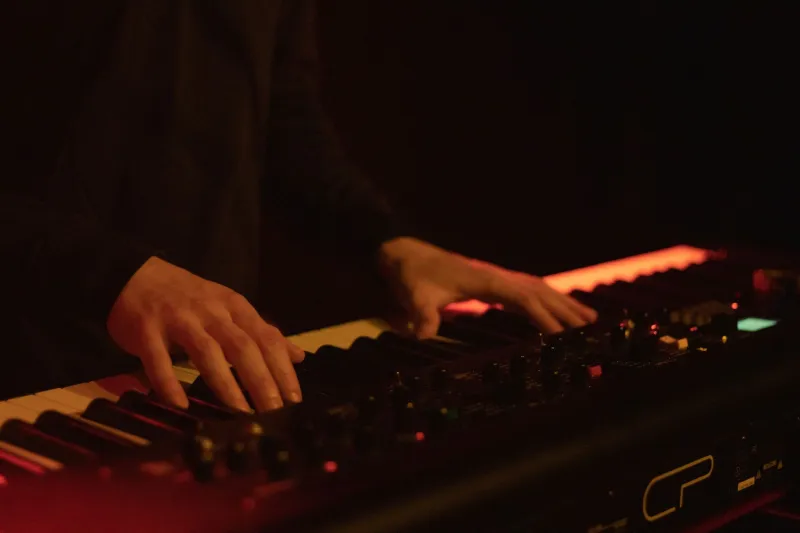
Photo by Photo by Kouji Tsuru on Unsplash on Unsplash
The bass drop hit and I felt it in my molars. Not metaphorically — literally, in my teeth, a low-frequency vibration conducted through a haptic vest strapped to my torso that was translating the sub-bass frequencies of a track into targeted physical sensation. Simultaneously, the room's scent system released something that smelled faintly of ozone and cedar. The lighting shifted to a deep amber I'd now permanently associate with that specific kick drum sound.
I was at a sensory design studio in Brooklyn, and I was being rewired.
The Synesthetes Who Never Asked for It
Real synesthesia — the neurological phenomenon where stimulation of one sense automatically triggers an experience in another — affects somewhere between 3 and 4 percent of the population, though estimates vary wildly depending on how you define it. A synesthete might perceive the number 7 as an irreducibly yellow thing, or hear a C-sharp and taste something metallic, or see spoken words as colored shapes moving through space.
For most synesthetes, the experience is involuntary, lifelong, and deeply personal. The color that a particular musical note produces isn't chosen — it just is, as fixed and self-evident as the note itself. Researchers who study synesthesia describe it as a form of cross-activation between brain regions that are neurologically adjacent but functionally separate in most people.
The commercial synesthesia designers — let's call them what they are — are not trying to replicate this. They're doing something adjacent, and the distinction matters. What they're building is a curated multi-sensory environment that mimics the effect of synesthetic perception without the underlying neurology. It's less about rewiring your brain and more about overwhelming your brain's sensory processing with carefully calibrated simultaneous input from multiple channels, forcing it to integrate experiences it would normally keep separate.
Whether that constitutes "real" synesthesia is a question that makes neuroscientists very tired.
The Studios Building This Stuff
The field is small but growing in ways that feel significant. A handful of studios and consultancies across the US are now explicitly marketing multi-sensory experience design — not as an accessibility feature or a gimmick, but as a primary creative medium.
In Los Angeles, studios working at the intersection of music and installation art have been experimenting with haptic floors and walls that translate audio frequencies into physical vibration patterns, letting deaf and hard-of-hearing audiences experience live music in entirely new ways. This started as an accessibility project and evolved into something that hearing audiences are now seeking out specifically for the altered experience it creates.
In New York, the immersive experience boom that gave us sleep-no-more-style theater has spawned a subset of designers who are specifically interested in chemosensory integration — using smell and taste as compositional elements alongside sound and image. The olfactory component of a musical experience is almost entirely unexplored commercial territory, which makes it either a massive opportunity or a massive mistake, depending on who you ask.
One designer I spoke with, who works primarily with electronic music artists on live show design, described her process as "building a score for every sense simultaneously." Her setups use a combination of directional speakers, sub-bass transducers, programmable scent diffusers, and dynamic lighting systems that are all mapped to the same compositional timeline. When the track modulates, everything modulates — not randomly, but according to a synesthetic logic she's developed over years of iteration.
"I have mild synesthesia myself," she told me. "So I'm essentially externalizing my own perceptual experience and letting other people inhabit it. Which is either generous or extremely weird, I haven't decided."
Taste-Reactive Audio and the Flavor of a Chord
The taste dimension is where things get genuinely strange. A small number of installations — mostly in gallery contexts, a few in experimental dining experiences — have begun exploring the relationship between flavor and sound, drawing on research that suggests these senses are more deeply entangled than previously understood.
The Oxford experimental psychologist Charles Spence has spent years documenting these cross-modal relationships: high-pitched sounds make food taste sweeter, low-pitched sounds emphasize bitterness, the tempo of background music affects how quickly you eat and how much alcohol you consume. This isn't fringe science — it's been replicated across multiple contexts and is now being actively deployed by the food and hospitality industries.
The artists working in this space are taking Spence's research and weaponizing it. One installation I encountered at a festival in Austin paired a live improvised electronic music set with a tasting menu where each course was designed to interact with the sonic environment in specific ways. The musicians had access to real-time flavor data from the kitchen and would adjust their sonic palette based on what the audience was eating. The result was something genuinely disorienting — the line between what you were hearing and what you were tasting became genuinely unclear in a way that felt less like a trick and more like a revelation.
The Neuroscience Is Real, the Marketing Is Complicated
Here's where the skepticism lives: multi-sensory integration is well-documented neuroscience. The brain combines sensory inputs constantly, and the combination produces perceptual experiences that are qualitatively different from any single sense alone. This is real, measurable, and not particularly controversial.
What's less established is whether engineered multi-sensory environments produce anything like the subjective experience of natural synesthesia. The people who live with synesthesia every day are often quite pointed about this. The experience of genuinely perceiving a sound as a color — not as a metaphor, but as an actual perceptual fact — is qualitatively different from experiencing a sound while a light changes color in the room. One is neurological. The other is environmental.
The commercial designers mostly acknowledge this distinction, even if their marketing sometimes elides it. The more intellectually honest framing is that they're not manufacturing synesthesia — they're manufacturing synesthesia-adjacent experiences that exploit the same cross-modal integration mechanisms in more controlled, less permanent ways.
Which, honestly, might be more interesting. Natural synesthesia is involuntary and lifelong. You can't turn it off, you can't choose which associations you have, and some synesthetes find aspects of it exhausting or disorienting. What the designers are building is opt-in, temporary, and customizable. It's synesthesia with an exit.
The Question of Authenticity
The deeper question lurking behind all of this is one that PPPHHHAAASSSEEE readers will recognize from roughly every conversation about experimental art ever: does authenticity matter, and if so, to whom?
If an engineered sensory environment produces a genuine perceptual shift — if you actually, in that moment, experience the bass as a texture and the melody as a temperature — does it matter that it was designed rather than neurological? The experience is real even if the mechanism is constructed. Art has always been in the business of manufacturing experiences that feel authentic precisely because they're carefully made.
The synesthetes I spoke with had mixed feelings. Some found the commercial synesthesia world exciting — a form of translation that lets non-synesthetes understand something about how they move through the world. Others found it reductive, a flattening of a complex neurological reality into a premium experience you can purchase at a festival.
Both responses are correct. That's the thing about manufacturing perception — you can do it well or badly, honestly or cynically, but you can't do it neutrally. Every sensory design choice is an argument about what experience is worth having.
The bass was still in my teeth when I left the studio. That felt like something.