Ghost in the Pocket: How Phantom Phone Vibrations Became the Glitch Everyone Wants to Feel
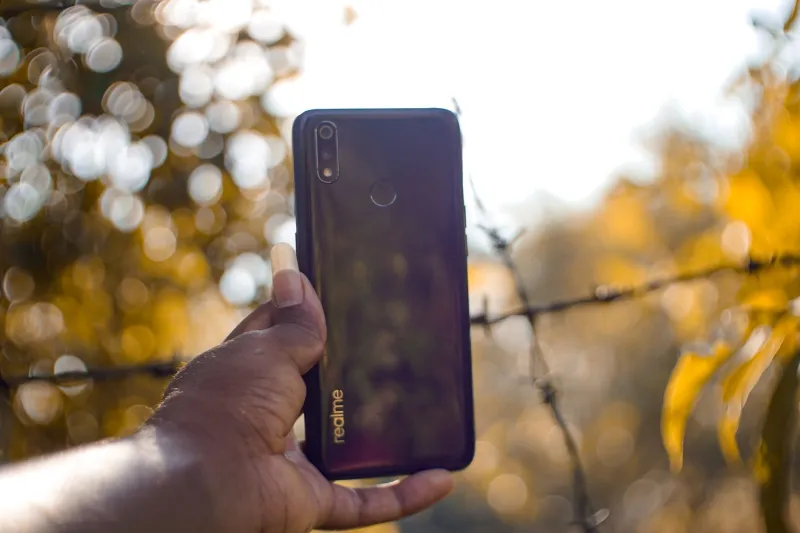
You reach into your pocket. Nothing. The phone sits on the table, dark and still, completely unbothered. And yet your thigh is absolutely certain something just happened.
Welcome to phantom vibration syndrome — the neurological hiccup that roughly 90 percent of smartphone users experience at some point, the one that every productivity blog wants you to cure, the one that a quietly growing subculture has decided is actually kind of sacred.
The Glitch That Wouldn't Stay Embarrassing
For years, phantom vibrations were filed under "modern inconvenience" — a minor symptom of being too attached to your devices, a thing you mentioned at dinner parties to seem self-aware about your screen time. Researchers at Indiana University published findings in 2012 suggesting the phenomenon was tied to anxiety and psychological dependency. The story was supposed to end there: glitch, bad, log off more.
But something weird happened on the way to digital detox culture. People started talking about their phantom buzzes not with shame, but with a kind of reverence. Forum threads on Reddit communities like r/Meditation and r/Glitchcore began cropping up where users described the sensation in almost devotional terms — a "body notification from nowhere," a "signal without a sender." One poster called it "the closest thing I have to hearing from the universe."
That's a long way from "maybe put your phone in the other room."
Haptic Art and the New Tactile Frontier
In Chicago, an installation artist named Dara Mwangi has spent the last two years building what she calls "phantom rooms" — gallery spaces where visitors wear custom-designed haptic vests that deliver randomized, unpredictable micro-vibrations to different parts of the body. The timing is deliberately dissonant. The sensations never arrive when you expect them.
"I'm not simulating phantom vibration, I'm creating the conditions for the brain to start generating its own," she explains. "After about fifteen minutes in the vest, people start feeling buzzes that aren't happening. Their nervous system fills in the gaps. That's the piece."
Mwangi's work sits at an intersection that's becoming increasingly crowded — haptic art, neuroaesthetics, and a broader cultural fascination with involuntary sensation as a creative medium. She's not alone. Brooklyn-based duo SKNFEEL released a limited-run wearable last year that pairs ambient drone music with irregular vibration patterns, explicitly designed to induce phantom sensation as an extended listening experience. It sold out in four hours.
The logic isn't so different from what noise musicians have been doing for decades — using the body's own perceptual machinery as the instrument. Except instead of overwhelming the ears, these artists are exploiting the seams in how your nervous system interprets touch.
Teenagers Are Summoning It on Purpose
If the art world is treating phantom vibration as a medium, certain corners of Gen Z have turned it into a practice. On TikTok, a loosely organized cohort of users — mostly between 16 and 22, mostly very into anything that sounds like it belongs in a creepypasta — have been posting videos claiming to demonstrate voluntary phantom vibration induction.
The technique, such as it is, involves a combination of breath work, focused attention on a specific body part, and what several creators describe as "expectation loading" — essentially convincing your nervous system that a buzz is imminent until it manufactures one. The comments sections are chaotic and wonderful: half the people insisting it works, half accusing the posters of just twitching on purpose, and a persistent minority claiming the sensation "unlocked something" for them.
Is any of this real? Probably partially. Neuroscientists have long understood that top-down prediction plays a massive role in tactile perception — your brain is constantly running simulations of what it expects to feel, and those simulations can occasionally override incoming sensory data. Whether you can consciously hijack that process is a different question, but the fact that adolescents are treating it like a learnable skill says something interesting about how this generation relates to their own neurology.
The Meditation Angle Nobody Expected
Meanwhile, in wellness circles that tend to resist anything too tech-adjacent, phantom vibration has found an unlikely home as a mindfulness object. A handful of somatic therapists and body-based meditation teachers in cities like Portland, Austin, and LA have begun incorporating phantom vibration awareness into sessions — not inducing it artificially, but using the experience when it naturally arises as a gateway into present-moment attention.
"Most of my clients initially feel a flash of anxiety when it happens, because their first instinct is to check their phone," says one somatic therapist based in Silver Lake who asked to remain anonymous because, as she put it, "my more traditional colleagues would absolutely roast me for this." "What we work on is staying with the sensation instead of chasing the source. The sensation is real. The phone call isn't. There's a whole teaching in that gap."
The framing is surprisingly resonant. The phantom vibration is, at its core, a moment when your body generates an experience that has no external referent — pure internal signal, uncoupled from the world. For a meditation tradition obsessed with the constructed nature of perception, that's not a bug. That's basically the whole curriculum.
What the Neuroscience Actually Says
So what is happening when your thigh lies to you? The leading explanation involves cortical remapping — your brain has essentially dedicated neural real estate to the expectation of phone vibrations, and that circuitry can misfire, particularly when you're in a state of heightened alertness or distraction. It's the same family of phenomenon as hearing your name called in a crowd when no one said it, or seeing a face in static.
What's notable is that the experience is strongly correlated with how emotionally invested you are in receiving notifications. People who feel high anxiety about missing messages report phantom vibrations more frequently. Your nervous system, in other words, is trying so hard to catch the signal that it starts inventing them.
For the subculture building an aesthetic around this, that's the whole point. The phantom vibration is the nervous system at its most nakedly human — anxious, hopeful, reaching toward connection that may or may not be there. It's the body doing something embarrassingly poetic.
Frequency Without a Source
There's a reason PPPHHHAAASSSEEE exists, and it's roughly this: the weird stuff that leaks out of the edges of normal experience tends to be where the most interesting thinking is happening. Phantom vibration syndrome was supposed to be a footnote in the story of smartphone addiction. Instead it's becoming a lens — for artists thinking about haptic perception, for teenagers probing the limits of voluntary sensation, for therapists rethinking the relationship between body and attention.
Your pocket is empty. Your leg is buzzing. Somewhere between those two facts, a whole subculture has decided to set up camp.
Honestly? We get it.