Basement Frequencies: The Rogue Sound Healers Building Resonance Chambers Where the Law Can't Hear Them
The Room Hums Before You Even Walk In
Before Marcus shows you the chamber, he makes you sign something. It's not a waiver exactly — he printed it off a template he found on a legal advice forum and modified it himself with a ballpoint pen. It says, roughly, that you understand this is experimental, that Marcus is not a doctor, and that whatever happens to you in the next forty-five minutes is, technically, your own business.
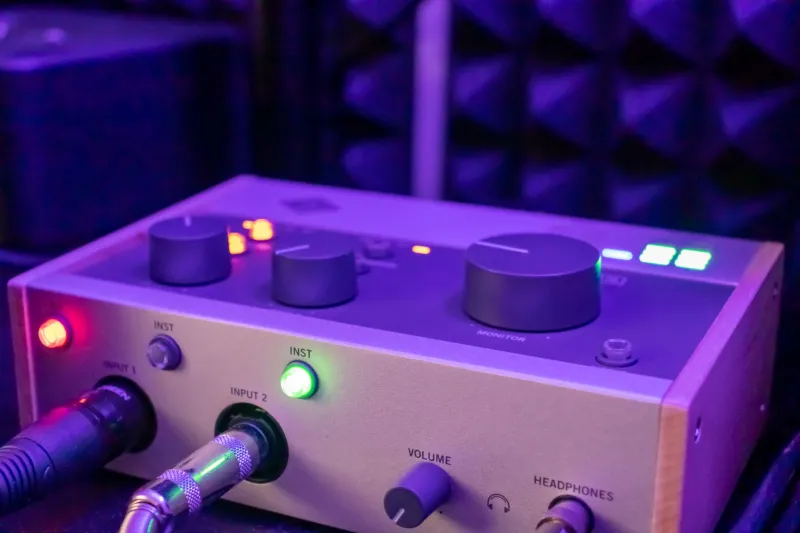
The chamber is in his basement in Akron, Ohio. It's built from salvaged plywood, acoustic foam tiles he bought in bulk off a surplus liquidation site, and a PVC pipe framework that took him three weekends to assemble. Inside, a pair of transducers — the kind normally embedded in massage chairs — are mounted to a platform just wide enough for a person to lie flat. A laptop running open-source frequency generation software sits on a folding table outside the door. Marcus calls the whole setup the "resonator." His clients — and yes, he has clients — call it the room.
"I'm not treating anything," Marcus says, with the careful language of someone who has rehearsed this sentence many times. "I'm just providing an acoustic environment. What people experience in that environment is their own experience."
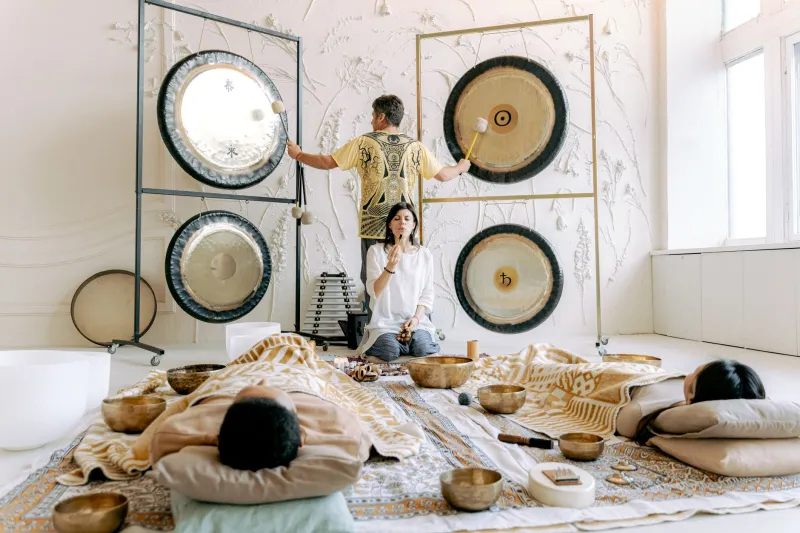
What people experience, according to the growing online communities documenting these sessions, is sometimes remarkable. Sometimes nothing. Occasionally, something they struggle to put words to.
Surplus Science
The parts for a DIY resonance chamber aren't hard to source. That's kind of the whole point. Transducers, signal generators, amplifiers, acoustic dampening materials — most of it flows freely through electronics surplus stores, eBay, and a handful of niche online retailers that cater to audiophiles and hobbyist engineers. A functional setup can run anywhere from three hundred to a few thousand dollars depending on how deep you want to go. Compare that to a single session at a legit float tank spa, and the economics start to make a certain kind of sense.
The communities building these things congregate in Discord servers and subreddits with names that read like a cross between a physics textbook and a wellness blog. They share wiring diagrams. They argue about the therapeutic legitimacy of specific frequencies — 40 Hz for cognitive function, 528 Hz for what some call "DNA repair" (a claim that makes most acousticians visibly uncomfortable), 432 Hz tuning as an alternative to the standard 440 Hz concert pitch. The debates get heated. The experiments keep happening.
Some of what's being tested here has legitimate acoustic science behind it. Vibroacoustic therapy — using low-frequency sound vibrations applied directly to the body — has actual peer-reviewed research supporting its use for conditions like Parkinson's tremors, fibromyalgia, and certain types of chronic pain. It's been studied in clinical settings. It exists. The problem is that most of the people building chambers in their basements are working three or four steps removed from that research, layering in concepts that range from plausible to deeply questionable, with no clinical oversight and no standardized protocols.
"We're not claiming to cure anything," says Dani, who runs one of the larger Discord communities dedicated to DIY frequency work. "But mainstream medicine isn't exactly rushing to fund this stuff either. So people are doing it themselves. That's always how it goes."
The Legal Gray Zone Is Getting Crowded
Here's where it gets complicated. Operating a device that claims to treat medical conditions without a license is illegal in the United States. The FDA has opinions about this. So does the FTC. The reason most of these practitioners stay under the radar isn't because the authorities aren't aware the scene exists — it's because enforcement is resource-intensive and the operations are small, decentralized, and careful with their language.
Nobody calls it treatment. They call it "sessions," "acoustic immersion," "frequency work," "vibrational wellness experiences." The semantic gymnastics are deliberate and, so far, mostly effective. A few practitioners have received cease-and-desist letters. One woman in Portland had her setup inspected after a neighbor complained about the noise (ironic, given the whole point). But for the most part, the movement operates in the same murky territory as a lot of wellness culture — just with more exposed wiring.
Traditional medicine's response has been predictably dismissive. Which, depending on who you ask, is either a reasonable reaction to unvalidated pseudoscience or a symptom of a healthcare system so expensive and inaccessible that people are building plywood healing chambers in their basements as a rational alternative. Possibly both.
What People Are Actually Looking For
Spend enough time in these communities and a pattern emerges. The people seeking out basement resonance chambers aren't, by and large, conspiracy theorists rejecting all of modern science. They're people who've tried the conventional route and hit a wall — chronic pain patients who've exhausted their options, anxiety sufferers who can't afford ongoing therapy, folks dealing with the kind of diffuse, hard-to-diagnose misery that the medical system is genuinely bad at handling.
For some of them, something in the chamber works. Or at least, something in the experience of lying in a dark, vibrating room for forty-five minutes while low-frequency tones move through their body produces a measurable shift in how they feel. Whether that's the frequencies, the forced stillness, the placebo effect, or some combination of all three is — and this is the honest answer — genuinely unclear. The people running these chambers don't always know either. The good ones say so.
"I've had sessions where nothing happened," Marcus admits. "I've had sessions where someone cried for twenty minutes and then said they felt better than they had in years. I don't know what to tell you about that. I don't have a clean explanation."
The Signal Keeps Getting Stronger
What's striking about this movement isn't the pseudoscience — wellness culture has always had that. It's the DIY infrastructure. The shared schematics. The community-built knowledge base. The way a guy in Akron and a woman in Tucson and a collective in a rented warehouse space in Detroit are all independently arriving at similar setups, refining them, comparing notes.
It looks less like a fringe belief system and more like open-source medicine. Which is either inspiring or alarming, depending on your priors about what happens when people stop waiting for institutions to help them.
The chambers keep getting built. The communities keep growing. The frequencies keep humming through walls that technically aren't supposed to be resonating with anything.
Marcus walks you out after the session. You feel — something. Looser, maybe. Quieter inside. You're not going to claim it cured anything. But you sign his weird printed form on the way out and you don't ask him to stop.