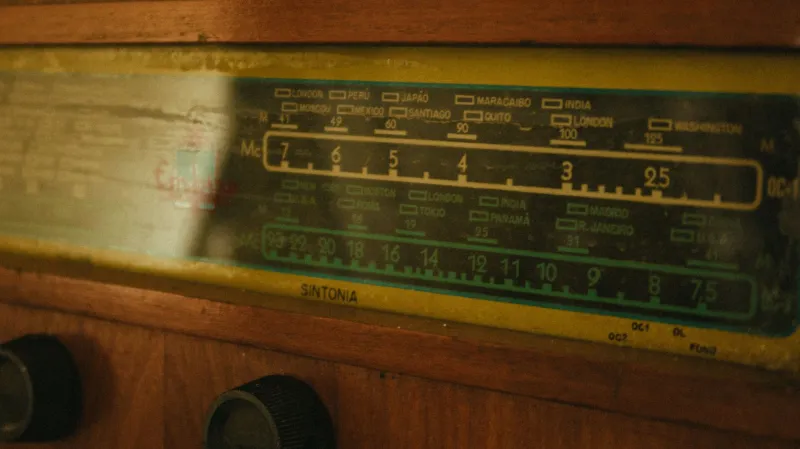
The Signal Hunters: Inside the Bedrooms Where Amateur Radio Sleuths Are Chasing Transmissions That Shouldn't Exist
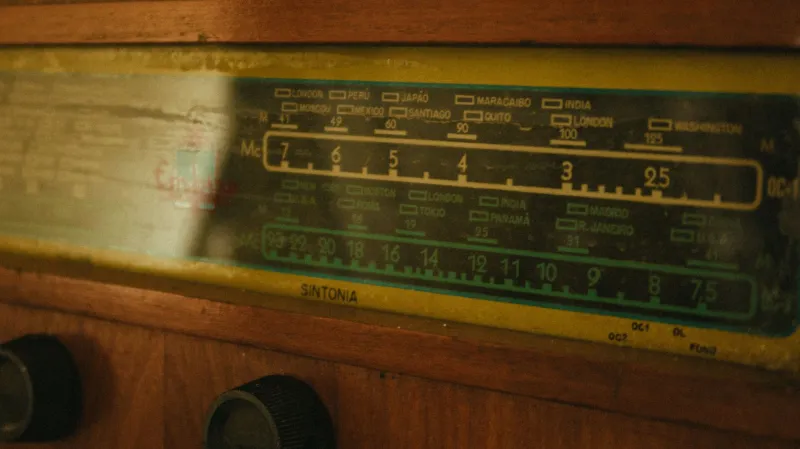
It starts the same way for almost everyone. You're up too late, you've got a cheap software-defined radio dongle plugged into a laptop, and somewhere in the waterfall display — that cascading visual river of electromagnetic noise — something blinks. A pattern. A pulse. Something that repeats in a way that static just doesn't.
You tell yourself it's nothing. Then you're still there at 4 AM, notebook full of timestamps.
Welcome to the signal hunters.
The Rig, the Room, the Rabbit Hole
Across the country, in apartments in Denver and spare bedrooms in rural Georgia and basement setups in suburban Ohio, a loose, largely anonymous community of amateur radio enthusiasts has been quietly building one of the weirder obsessions the internet has ever quietly nurtured. They call themselves things like "DX chasers," "numbers nerds," or just "listeners." They congregate in Discord servers with names like FREQ/UNKNOWN and on subreddits that look, at first glance, like technical support forums but are actually something closer to collective séances.
What they're doing, technically, is scanning the shortwave and medium-wave radio spectrum — frequencies between roughly 1.6 and 30 MHz — for signals that don't match any known broadcaster, military channel, or amateur operator. What they're doing emotionally is something harder to categorize.
"I've been doing this for about three years," says one user who goes by the handle Null_Carrier and declined to share his real name. "I've logged maybe 800 hours of recordings. I've identified probably 95% of what I've caught — aircraft comms, number stations, maritime beacons, all the normal stuff. But there's this 5% that I genuinely cannot explain. And that 5% has basically reorganized my entire life."
Numbers Stations Were Real. That's the Problem.
Here's the thing that gives this hobby its particular charge: the unexplained stuff isn't always actually unexplained. Numbers stations — shortwave broadcasts of robotic voices reading strings of digits, often preceded by musical tones — were a documented Cold War espionage tool used by intelligence agencies to communicate with field agents. They're real. They existed. Some probably still do.
That historical precedent is both the community's greatest credibility anchor and its most dangerous trap. Because once you know that governments actually did broadcast secret coded transmissions over public airwaves for decades, the conceptual leap to they're still doing it, and weirder becomes a lot shorter.
"People hear one legitimate anomaly and then they're primed to find more," says Dr. Renata Osei, a cognitive psychologist at a mid-sized university in the Pacific Northwest who studies pattern recognition and apophenia — the human tendency to perceive meaningful connections in unrelated things. "The brain is a prediction machine. When it finds a pattern in noise, it gets a reward. That reward is genuinely pleasurable. So you go looking for the next one. And the next."
She's careful to note this isn't pathological, or not necessarily. "It's the same mechanism behind musical appreciation, behind scientific discovery. The question is always: what are you doing with the pattern once you've found it?"
The Taxonomy of the Unexplained
Spend enough time in these communities and you start to learn the vocabulary. There are "woodpeckers" — a nickname borrowed from a real Soviet-era over-the-horizon radar system that used to blast a rapid-fire pulse across shortwave frequencies — which now gets applied to any repetitive burst transmission that doesn't match known sources. There are "ghost carriers," unmodulated signals that carry no audio but sit stubbornly on a frequency for hours or days. There are "squeaky wheel" anomalies, transmissions that seem to shift in pitch in response to atmospheric conditions in ways that feel, to the listeners, almost deliberate.
Most of these have mundane explanations. Intermodulation distortion from nearby electronics. Ionospheric ducting, where atmospheric layers bend radio waves thousands of miles off course, dropping a Brazilian taxi dispatcher into a frequency that looks completely wrong on a US-based receiver. Faulty power lines. Industrial equipment. The electromagnetic world is an extraordinarily noisy place.
But "most" isn't "all." And the community knows this.
"I caught something in 2022 that I still haven't been able to identify," says a listener who goes by Ether_Margot on the forums. "It was a slow, repeating tone cluster — seven tones, always in the same sequence, always at the same intervals. It broadcast for eleven days straight, always between 2 and 5 AM Eastern, then disappeared. I've sent the recording to three different people with actual RF engineering backgrounds. None of them could tell me what it was."
Frequency as Faith
What's genuinely fascinating about this community — and what makes it feel distinctly now — is the way the search has taken on something approaching spiritual weight for its participants. Not in a fringe-religion way, necessarily, but in the way that any obsessive pursuit of meaning eventually starts to look a little like prayer.
"I think people are looking for proof that there's more going on than what they can see," says Null_Carrier. "Not necessarily aliens or government conspiracies, though some people go there. More like — proof that the world is dense with information we can't access. That there's signal underneath everything. That if you just listen carefully enough, something will answer."
There's a real poetry to that, and it maps onto something broader happening culturally. In an era of information overload — where every surface of life has been colonized by content optimized to be consumed and forgotten — the act of sitting alone in a dark room, headphones on, chasing a sound that might mean something, is almost countercultural in its patience and its commitment to not knowing.
The signal hunters aren't looking for easy answers. They're specifically, almost devotionally, interested in the hard ones.
The Static Was Always Talking
Scientifically, the electromagnetic spectrum is genuinely alive with phenomena that aren't fully understood. Atmospheric whistlers — electromagnetic signals generated by lightning that travel along magnetic field lines and can be received thousands of miles away — sound like descending tones that could easily be mistaken for something intentional. Schumann resonances, the extremely low-frequency electromagnetic pulses that bounce around the cavity between the Earth's surface and ionosphere, have been studied since the 1950s and still produce data that surprises researchers.
The universe is broadcasting constantly. It has been since before humans were around to receive it. The signal hunters didn't invent the noise. They just decided to pay attention to it.
And maybe that's the real story here — not whether any particular transmission is secret or alien or government-coded, but what it means that a growing number of people have decided that listening is a practice worth building a life around. That sitting with ambiguity, charting the unknown, staying open to the possibility of signal in the static, is a meaningful way to spend your hours.
Your algorithm will never serve you that. You have to go find it yourself.
Tune in. Stay weird. The frequency is waiting.