Signal Kids: The TikTok Teenagers Who Say the Static Is Talking Back

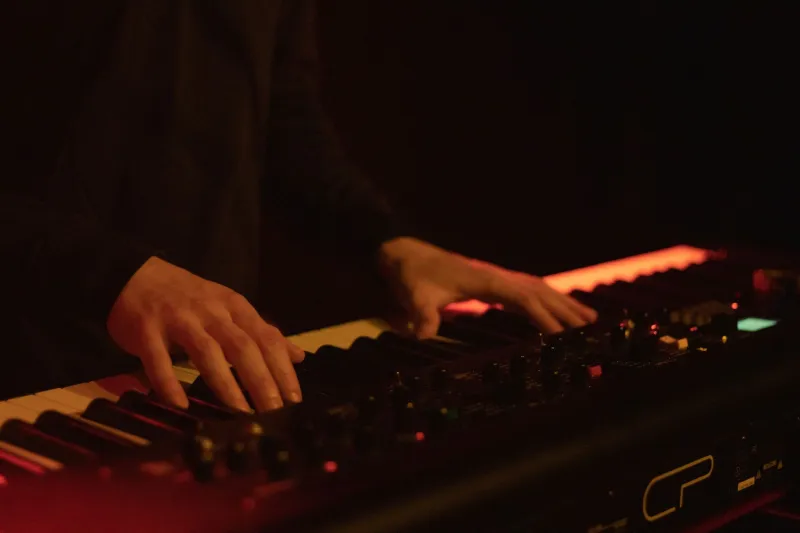
Photo by Photo by Akshar Dave🌻 on Unsplash on Unsplash
It starts, usually, with a phone charger.
Somewhere around 2 or 3 AM — the hour that has always belonged to the weird and the sleepless — a teenager holds their phone close to a charging cable and hears something. Not the normal electrical hum. Something with shape. Something that sounds, if you listen long enough, like it has a rhythm. Maybe a pattern. Maybe a message.
They film it. They post it. And then the algorithm, that great and indifferent amplifier of everything strange, does what it does.
The Community That Built Itself in the Static
The subculture doesn't have one name. Depending on where you find it, it goes by "signal kids," "frequency listeners," "the static community," or just "people who hear it" — that last one doing a lot of work to imply that most people don't, and that you're either in the club or you're not. The community is primarily TikTok-native, though it bleeds into Discord servers, Reddit threads, and YouTube long-form video essays that treat the whole phenomenon with the earnest investigative energy of a mid-2000s paranormal documentary.
The core claim varies by user, but the general shape is consistent: everyday technology — phone chargers, Bluetooth speakers, smart home devices, certain frequencies of white noise machines — is emitting audio signals that most people's brains filter out as background noise. Signal kids claim they don't filter it. They hear it. And what they're hearing sounds, to them, like something intentional.
Some describe it as numerical sequences. Others hear what they characterize as "tones with emotional content" — not words, but frequencies that feel like they're trying to communicate a mood or a warning. A subset of the community has developed an entire interpretive framework, a kind of DIY semiotics for parsing what the static is supposedly saying.
The Psychology of Hearing Things Together
Before we go any further: there are completely mundane explanations for a lot of what these kids are describing. Electrical interference is real. Cheap phone chargers do emit audible frequencies. Smart speakers have been documented producing sounds in the 20Hz range that some people can perceive as vague unease rather than a distinct tone — a phenomenon that has been studied in the context of hauntings, interestingly enough. The brain is also extraordinarily good at finding patterns in noise. That's not a bug; it's one of the core features of human cognition. Pareidolia — the tendency to see faces in random visual noise — has a direct auditory equivalent, and it kicks in hard when you're sleep-deprived, slightly anxious, and staring at a phone in the dark at 2 AM.
Dr. Simone Okafor, a clinical psychologist who studies adolescent social behavior and online communities, frames what's happening here as a textbook case of "communal meaning-making in the absence of stable narrative structures." Which is a very academic way of saying: these kids are doing what humans have always done when the world feels chaotic and uninterpretable — they're finding a signal in the noise, and then finding other people who hear the same thing, and building a community around the shared experience of hearing it.
"The content of the belief almost doesn't matter," she says. "What matters is the function it serves. And the function here is connection, identity, and the feeling that you're perceiving something others can't. That's a very powerful social reward."
The Algorithm as Co-Creator
What's genuinely new about this particular flavor of collective belief is the role TikTok's recommendation engine plays in manufacturing and sustaining it. This isn't a rumor that spread through a school. It's a mythology that the algorithm actively constructed by feeding users incrementally weirder content until the community existed.
The process is almost mechanical. A teenager posts a video of their phone charger making a weird sound with the caption "does anyone else hear this." The video gets modest engagement. TikTok's system notes that users who watched it also engaged with content tagged with paranormal, liminal spaces, ARG (alternate reality game), and sleep paralysis. It begins cross-pollinating. Within a few weeks, that teenager's For You page is a dense ecosystem of signal-related content, and they've found a community of thousands of people having what appears to be the same experience.
Except the algorithm didn't find a pre-existing community. It assembled one. The shared experience isn't evidence that the signals are real. It's evidence that TikTok is very good at creating the social conditions under which a shared experience feels real.
The ARG Question
Here's the part that makes this genuinely interesting rather than just sad: a meaningful chunk of the signal kids community knows this, and doesn't care. There's a substantial contingent that frames the whole thing explicitly as a kind of participatory fiction — a collectively authored alternate reality game with no official designers, no solution, and no endpoint. They're not claiming the signals are literally real. They're choosing to behave as if they might be, because the act of listening, interpreting, and sharing is more interesting than whatever else they'd be doing.
This is actually a sophisticated cultural move, even if it doesn't always look like one from the outside. It's the same impulse that drives collaborative worldbuilding, fan fiction, and the best ARGs of the early internet era — the Cicada 3301 energy, the "I Love Bees" Halo marketing campaign, the SCP Foundation. The signal kids might be the latest iteration of a long tradition of people who find the world more livable when it contains mysteries that require active participation to explore.
What the Static Actually Sounds Like
We spent about two weeks in the community. We watched hundreds of videos. We joined two Discord servers and lurked in a Reddit thread with 40,000 members.
Here's what we can tell you: the sounds in the videos are real sounds. They're mostly electrical interference, HVAC harmonics, and the kind of audio artifacts that cheap consumer microphones introduce when filming in low light. Occasionally there's something that genuinely doesn't have an obvious explanation — not because it's paranormal, but because consumer electronics are complicated and sometimes do weird things.
But here's the other thing we can tell you: listening to all of it, late at night, through headphones, for hours at a time — you start to hear things. Not signals. Not messages. But something. The brain does its thing. The pattern-matching fires up. The static starts to feel like it has texture and intention.
Maybe that's the point. Maybe the signal kids aren't receiving transmissions. Maybe they're just paying very close attention to the noise that surrounds all of us constantly, and refusing to accept that it doesn't mean anything.
That's not delusion. That's art.
Or it's both. PPPHHHAAASSSEEE has always been comfortable with both.