Weird Washed: What Happens to Rebellion When a Brand Buys It a Latte
The Aesthetic Arrived Without the Artist
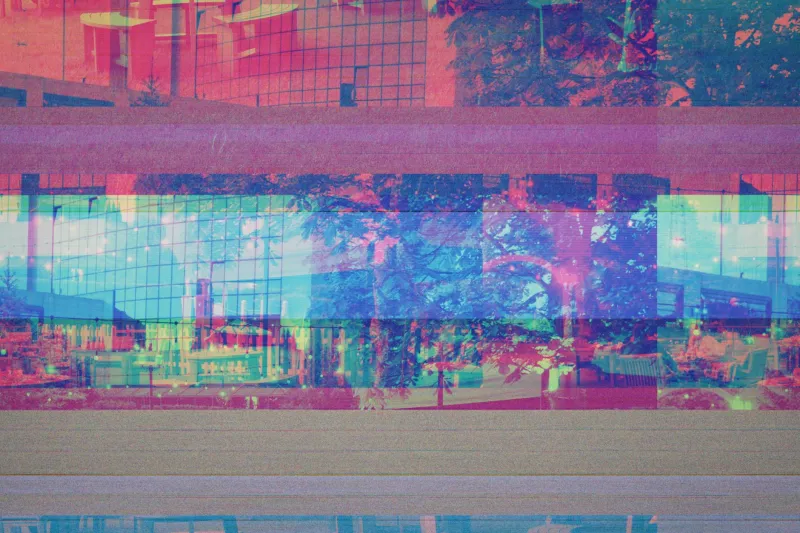
Let's set the scene. A major beverage brand drops a limited-edition campaign. The visuals are glitchy, distorted, vaguely surrealist — the color palette looks like it was pulled from a mid-2000s experimental net art archive. The copy is deliberately weird, leaning into non-sequiturs and broken logic. The campaign wins awards. The brand gets written up as "culturally plugged-in." And somewhere, an actual experimental artist who spent fifteen years building that visual language is watching it happen from a studio apartment they can barely afford.
This is the paradox at the heart of contemporary weird culture, and it is getting more acute by the year.
The mainstreaming of avant-garde aesthetics isn't new — it's practically a law of cultural physics. Punk got absorbed. Hip-hop got absorbed. Queer underground culture got absorbed. Every genuinely subversive movement eventually finds itself reflected back through the funhouse mirror of commercial co-option, smoothed out and made palatable for an audience that would have crossed the street to avoid the original thing. But something about the current moment feels different in its speed and its shamelessness.
The Algorithm Made It Faster
The traditional cycle of subculture-to-mainstream used to take years, sometimes decades. There was a lag time that allowed movements to develop depth, internal language, genuine community infrastructure before the culture vultures showed up with licensing deals. That lag is effectively gone.
Thanks to the speed of social platforms, a genuinely strange micro-aesthetic can go from niche Discord server to brand mood board in about six weeks. The extraction happens before the culture has finished building itself. Which means what gets absorbed and repackaged isn't a fully formed movement — it's a surface, a set of visual or sonic signifiers stripped of the context and community that gave them meaning.
This is how you end up with a Fortune 500 company using glitch art aesthetics in a Super Bowl ad, or a fast fashion brand dropping a "weird girl" collection, or a tech startup describing itself as "avant-garde" in its Series B pitch deck. The vocabulary gets borrowed; the actual weirdness — the discomfort, the marginalization, the genuine refusal to cooperate with commercial logic — gets quietly left behind.
"Weird" as a Brand Positioning Strategy
Here's the uncomfortable truth that the marketing industry figured out roughly a decade ago: authenticity is the scarcest resource in contemporary consumer culture, and the appearance of weirdness is one of the most efficient ways to simulate it.
When everything is optimized and everything looks the same, a brand that looks slightly off-center reads as real. It reads as human. It reads as the kind of thing a person with taste and personality made, rather than a committee. This is why you have major corporations hiring avant-garde directors for their ad campaigns, why luxury brands collaborate with underground artists (briefly, on a limited run, before moving on), why "anti-aesthetic" has become an aesthetic category in itself.
The problem isn't that corporations are doing this. Of course they're doing this — it works. The problem is what it does to the ecosystem it feeds on. When weirdness becomes a positioning strategy, it creates a perverse incentive: genuine experimental culture gets strip-mined for its most legible, most marketable surface elements, while the actual artists and communities doing that work remain economically marginal. The brand gets the cultural capital; the culture gets... an Instagram story.
The Sanitization Is the Point
There's a specific kind of weirdness that brands are comfortable with, and it's worth naming it precisely. It's weirdness that doesn't make you feel bad. It's weirdness that doesn't challenge power structures. It's weirdness that is visually interesting but emotionally safe, that gestures at transgression without actually transgressing anything.
This is fundamentally different from what genuine experimental culture has always been about. The avant-garde — in music, in visual art, in performance, in literature — has historically been weird at something. The strangeness was directed. It was a critique, a refusal, a provocation with a target. Dada was weird at the bourgeoisie and at the war machine that bourgeois culture had produced. No-wave was weird at the music industry and at the gentrification eating New York alive. Riot Grrrl was weird at the punk scene's own misogyny.
Brand weirdness has no target. It's weirdness as decoration, as vibe, as a signal of cultural sophistication aimed at consumers who have been trained to read those signals. It's a costume that references rebellion without the inconvenience of actually rebelling against anything.
So What Do Actual Weird People Do Now?
This is the genuinely interesting question, and the answer coming out of underground creative communities is more sophisticated than simple purity politics.
Some artists are leaning into the contradiction deliberately — taking corporate money and using it to fund work that bites the hand. Some are building infrastructure specifically designed to be illegible to commercial logic: economies of gift, intentional obscurity, distribution methods that don't scale. Some are doubling down on the genuinely difficult and uncomfortable work that brands will never touch, because the actual function of that work was never to be cool — it was to be true.
The most honest version of the conversation acknowledges that there's no clean solution. Subcultures have always had a complicated relationship with mainstream absorption — sometimes it brings resources and visibility to people who were previously invisible, and that's not nothing. The queer underground didn't only lose when its aesthetics went mainstream; some of what got transmitted mattered.
But it's worth staying clear-eyed about what gets lost in the translation. When a brand sells you weirdness, they're selling you the feeling of being outside the mainstream while keeping you firmly inside the consumption economy. That's a neat trick. Recognizing it doesn't make you immune to it — but it's a start.
The frequencies that actually matter have always been the ones that are hardest to clean up and resell. Hold onto those.