Scores for Ghost Buildings: The Composers Soundtracking Demolished America
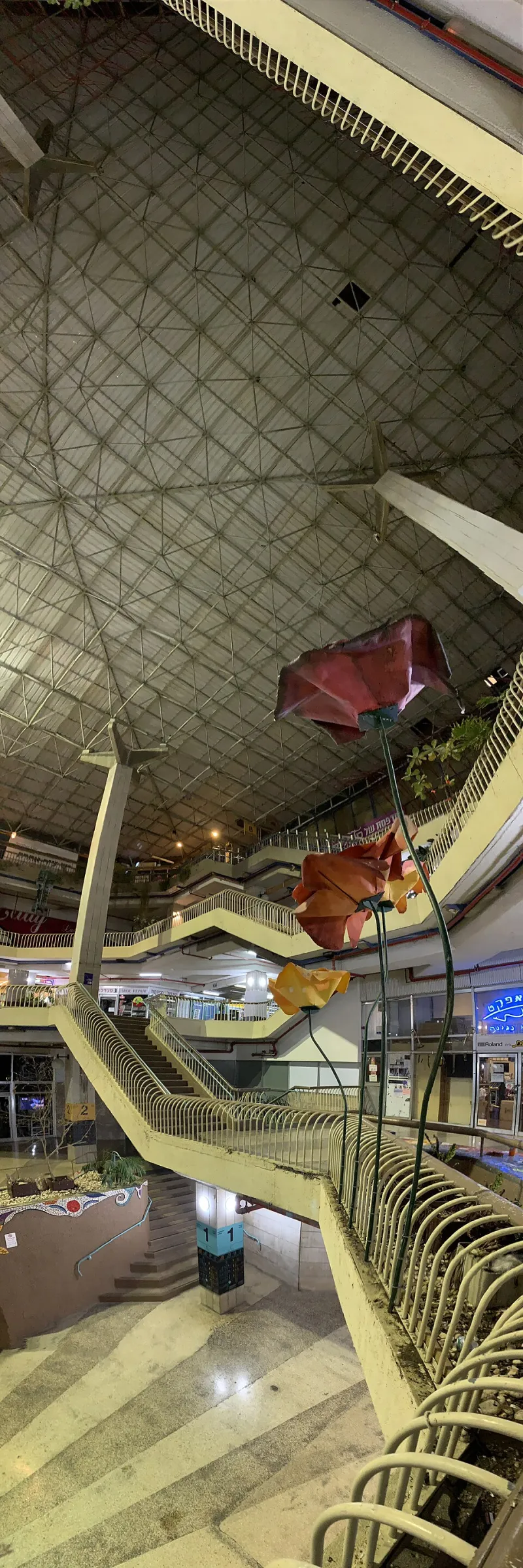
Photo: Yitzilitt, CC BY-SA 4.0, via Wikimedia Commons
Somewhere in a storage unit outside Cleveland, there's a recording of a string quartet performing inside the atrium of a shopping mall that was bulldozed in 2016. The piece was written for that specific space — its 80-foot skylight, its dead fountains, its particular reverb, which is to say its particular soul. You cannot hear the piece correctly anymore. That's the point.
Music With Nowhere to Live
Call it site-specific composition's darker cousin: site-destroyed composition. These are composers who don't write for concert halls but for condemned theaters, demolished childhood homes, the food court of a dead mall in the exurbs. The building is the instrument. When the building goes, the score becomes a kind of tombstone — playable, technically, but forever out of its natural habitat.
One composer I'll call M. (she performs under a name that's just a highway exit number) wrote a 40-minute drone piece for her grandmother's house in Detroit before it was torn down. She recorded herself playing every room — the kitchen got a harmonium, the attic got bowed cymbals — and then layered the recordings into a single track. "The house had a chord," she told me. "Every building does. You just have to sit in it long enough to hear it."
The Liminal Crowd Found Its Composers
There's a reason this movement is blooming now. The internet is obsessed with liminal spaces — the dead mall photo essays, the backrooms, the empty school at 3 a.m. That fascination isn't really about architecture. It's about the sound of absence. A photograph of an empty mall is silent by default. A composition written for that mall is silent by choice, and choice is where the art lives.
A collective in Ohio performs what they call "acoustic séances": they take field notes, blueprints, and memory interviews from people who worked in a demolished space, then improvise a score from the descriptions. A former Sears employee's memory of the PA chime becomes a motif. The hum of the HVAC — described from memory, thirty years later — becomes a drone bed. It's oral history you can hear.
Grief You Can Mix in Stereo
Skeptics will call this kitsch, and some of it is. Nostalgia is a cheap frequency. But the best of this work isn't nostalgia — it's mourning, and mourning is unfinished business. When M. plays her grandmother's house piece, she doesn't tell audiences what it is until afterward. "If I tell them first, they hear a eulogy," she says. "If I tell them after, they heard a house."
The demolished mall, the condemned theater, the razed childhood home — America is tearing down its shared rooms faster than it's building new ones, and we haven't developed a ritual for it. These composers are building the ritual out of the only material left: sound that remembers a shape.
The recordings exist. The buildings don't. Somewhere, a string quartet is playing to an atrium full of fountains that will never run again, and if you close your eyes, you can almost hear the food court breathing.