Somebody Chose That Ding: The Anonymous Cabal Scoring Your Everyday Life
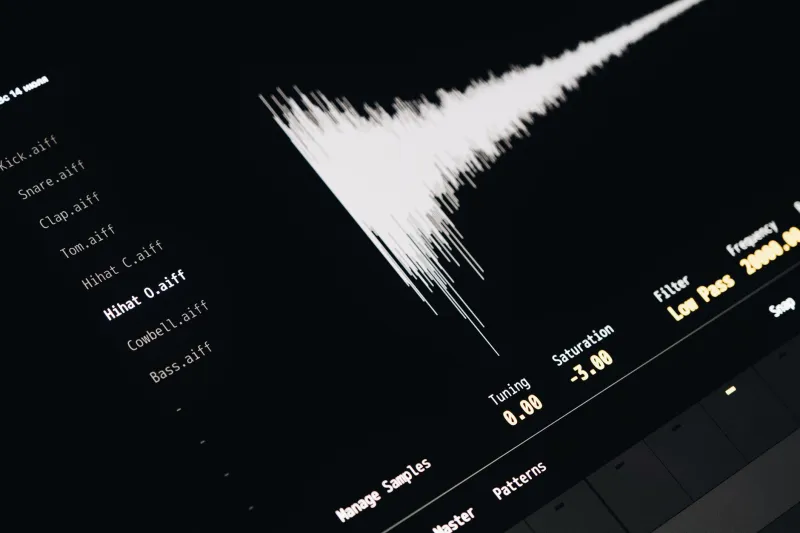
Somewhere in America, there is a person who decided what your microwave sounds like when your leftovers are ready. Someone else chose the pitch of the crosswalk chirp you cross streets by. A third person tuned the 'ding' your airline plays when the plane lands safely — the sound that tells three hundred strangers, at 200 miles an hour, that they can exhale.
You will never meet these people. You couldn't pick them out of a lineup. And yet they have composed the soundtrack of your entire life, one functional beep at a time, with more reach than any musician alive.
I think this is a scandal. Let me explain.
The Most-Heard Composers You've Never Heard Of
The field is called sonic branding or product sound design, and it's tiny. A few hundred specialists worldwide handle the audio identities of the machines, apps, and appliances that surround us. When a company needs a startup chime or a notification blip, it goes to one of these studios, where a designer will spend weeks on a sound you'll hear for a quarter of a second and thousands of times before you die.
The craft is genuinely brutal. A good functional sound has to be distinct — you must know instantly which appliance is talking — but never annoying, because you'll hear it every day forever. It has to survive phone speakers, cheap laptop drivers, hearing loss, kitchen background noise, and the acoustic chaos of an actual home. Designers talk about 'earworm fatigue': a sound too melodic becomes hated within a week. Too flat, and it's invisible — which sounds ideal until the product needs to tell you something's wrong.
Some of these sounds are masterpieces and we treat them like furniture. The classic Mac startup chime? Composed by a Grammy-winning sound designer. The T-Mobile jingle? Deliberately built from the same intervals as the 'ding' of a door chime, to feel welcoming on a cellular level. The crosswalk 'cuckoo' and 'chirp' patterns in US cities were engineered so a pedestrian could tell, blind, which direction the crossing runs. Every one of these was a meeting. A draft. A revision. A person going home having spent their Tuesday on the pitch of a parking garage.
Why Anonymity Is a Design Flaw
Here's my actual argument: it's not the beeping I object to. It's the accountability vacuum.
We have norms for almost every other designed element of public life. Buildings have architects with names. Fonts have type foundries we can name-drop at parties. But sound — the most emotionally direct sense we have, the one that bypasses conscious thought entirely — gets designed in total anonymity, by contractors, for corporations, with zero public record.
And it matters, because these sounds shape behavior. A notification chime is engineered to trigger a dopamine response; that's not a conspiracy theory, it's the brief. The urgency of a smoke alarm's three-beep pattern is a life-or-death standard that took decades and lawsuits to get right. When an app's 'ping' is tuned to be just irresistible enough, who signed off on that? What was the brief? We get to review the architecture of a public plaza but not the acoustics of the attention economy that lives in our pockets.
There's also a cultural cost. A handful of studios — concentrated in a couple of coastal cities, staffed by a demographic you can probably guess — are deciding the sonic texture of American life for everyone. The default beep of the modern world is a monoculture, and nobody voted on it.
Demand the Credits
What would change if we knew their names? Probably not much, practically. But names create careers, and careers create a discipline, and disciplines develop ethics. Architects have accessibility codes. Journalists have standards. Sound designers for the public sphere should have something equivalent — a professional identity you can question, praise, or sue.
So here's a modest proposal: credits. Every public-facing sound — every crosswalk, every emergency alert, every default notification shipped to a billion devices — gets a line in the documentation. Who made it, when, and why. If a city can put a plaque on a bridge, a corporation can footnote a chime.
Until then, listen around you. The microwave, the elevator, the seatbelt chime, the register at the coffee shop. Somebody composed all of it. Somebody spent weeks on it. Somebody's life's work is playing on loop in every gas station in Ohio, and they can't even put it on their résumé.
That's not humility. That's a system that decided the soundtrack of your life was too small to matter. It isn't. Turn the volume up on the question: who wrote this, and why does it sound like that?
We deserve to know our composers.