The Laundromat Will See You Now: Six Residencies That Aren't in a Barn
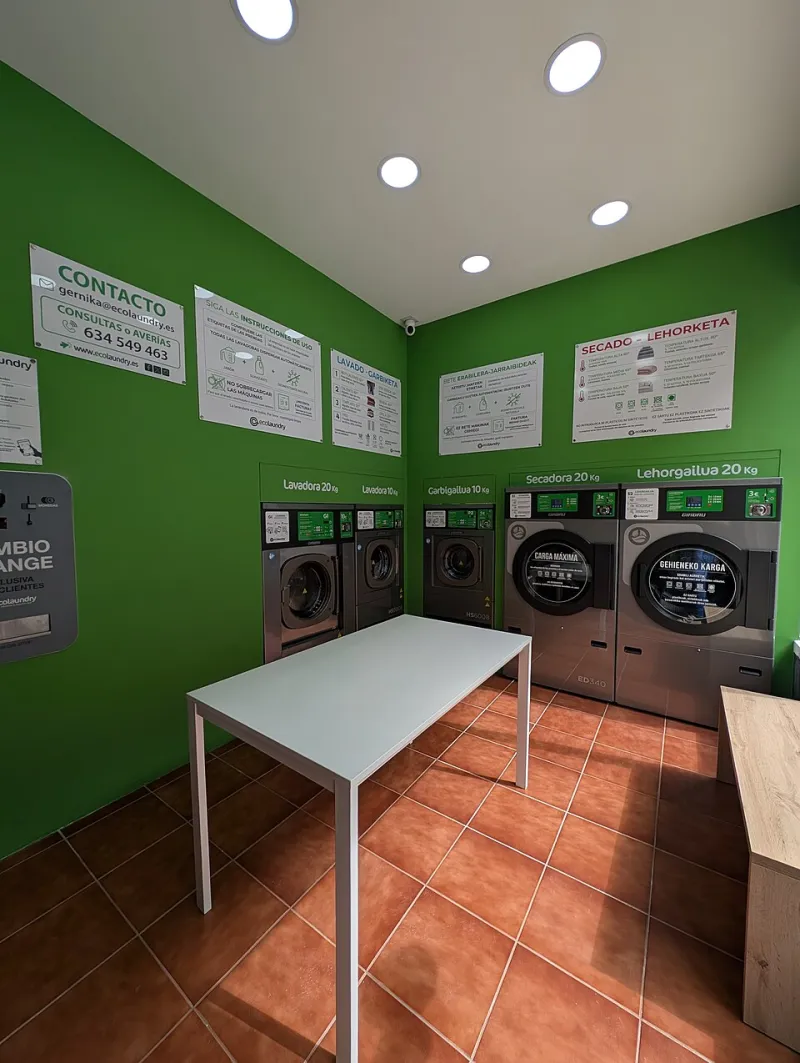
Photo: Андрей Романенко, CC BY-SA 4.0, via Wikimedia Commons
The classic artist residency looks like this: a barn, a view, a stipend, three weeks of silence, and a finished body of work nobody sees until a group show in a slightly nicer barn. It's fine. It's also been the same since roughly 1974, and if you've spent any time around experimental work lately, you know the interesting stuff isn't happening in the pastoral model. It's happening in places with fluorescent lighting and a mop bucket.
What follows is not a definitive list — residencies are popping up and folding constantly, and half of them don't want the attention — but it's a working map of the strangest, most productive programs running in the US right now, and the reasoning behind why they work.
1. The 24-Hour Laundromat (Cleveland, OH)
A rotating cast of two to four artists lives in a converted utility room behind a functioning wash-and-fold, with studio access technically defined as "any flat surface not currently holding a customer's belongings." Artists work the overnight shift. The pay is a small stipend plus free laundry, which, if you've ever done a residency, is genuinely the most useful thing anyone has ever offered you.
The work coming out of this place is loud and analog — hand-built instruments, tape loops recorded off the dryers, a 40-minute piece built entirely from the sound of a quarter slot. The constraint is the point. You cannot be precious about your practice when a stranger needs the table.
2. The Grain Silo (rural Kansas)
A former agricultural co-op silo with a forty-foot reverberation tail and no climate control. The program runs in shoulder seasons because summer inside a metal cylinder in Kansas is a medical event. Artists get two weeks, a cot, and a rule: no amplification.
The no-amp rule is the genie in the bottle. Without speakers, the silo itself becomes the instrument. Recent residents have built wind harps in the ventilation shafts, recorded whole albums by walking in circles with contact mics taped to their boots, and one person spent eleven days mapping how the room changed tuning as the outside temperature dropped. It's the only residency I know of where the building is listed as a collaborator on the release.
3. The Motel 6 Off I-40 (New Mexico)
This one is real in the sense that it's a working motel that rents two rooms permanently and doesn't advertise. A small arts org holds the lease. Artists check in for a week, get a keycard, and aren't allowed to leave the property except to buy food. Room 114 is the studio. Room 118 is where you sleep, if you sleep.
The output skews toward durational and observational work: long-form video of the parking lot, paintings made from the carpet pattern, a serialized novella about the night clerk. One resident spent the entire week interviewing truckers about their dreams and turned it into a 90-minute audio piece that is, no exaggeration, one of the best things I've heard this year. Nothing about the residency feels artistic. That's why it works.
4. The Working Casket Factory (Indiana)
Yes. A functioning casket manufacturer, family-owned, that has been running since the 1950s and now hosts one artist per quarter in a disused finishing bay. The owner is not an art person. He is a businessman who was tired of the building being half-empty and, in his words, "figured artists are quiet."
They are not quiet, but they are respectful, and the program has produced astonishing work — sculptures from rejected lumber, an installation built from the machinery's own offcuts, and a series of portraits of the assembly line crew that the crew themselves now insists stays up in the break room. The residency's real contribution is time on a factory floor, which is a perspective most MFA programs will never give you.
5. The Bowling Alley (Milwaukee, WI)
Twelve lanes, 1962, wood that's been oiled for six decades. The residency is three weeks and comes with the requirement that you leave the lanes playable. Artists have to work around league night. Several have failed. The ones who succeed end up making things that respond to a room full of people having a normal Tuesday — kinetic sculpture installed in the ball return, a score written for gutter balls, a scent piece that the league politely asked to be removed.
6. The Municipal Wastewater Plant (Wherever You Can Get One)
This is the frontier, and only two cities currently do it. A short residency, heavily supervised, with access to the plant's soundscape and its infrastructure. The work is inevitably about water, and inevitably about something bigger than water, and the security briefing alone is worth the application.
Why Weird Constraints Beat a Nice View
Every one of these programs shares a structure: a place that is not for art, a hard limit, and an audience that did not come for the art. That combination does something to a practice that a pastoral residency rarely does. It forces negotiation. It forces you to make work that can survive contact with a customer, a bowler, a night clerk, a forklift.
The results are rougher and stranger than the gallery-ready output of the traditional circuit — and, honestly, more alive.
How to Actually Apply
Most of these don't have a formal portal, and that's not an accident. Cold-email the business first, not the arts org — a motel manager who says yes will make the whole thing happen. Lead with what you'd do with the space, not your CV. Offer something in return, whether it's a shift covered, a wall painted, or a finished piece donated. Ask about insurance and safety in writing. And bring a fan, because the silo is no joke.
Deadlines cluster in late winter. Start now. The casket factory takes one person a quarter, and the queue is longer than you'd think.