Same 47 Listeners: The Tiny Podcasts Building the Tightest Communities on Earth
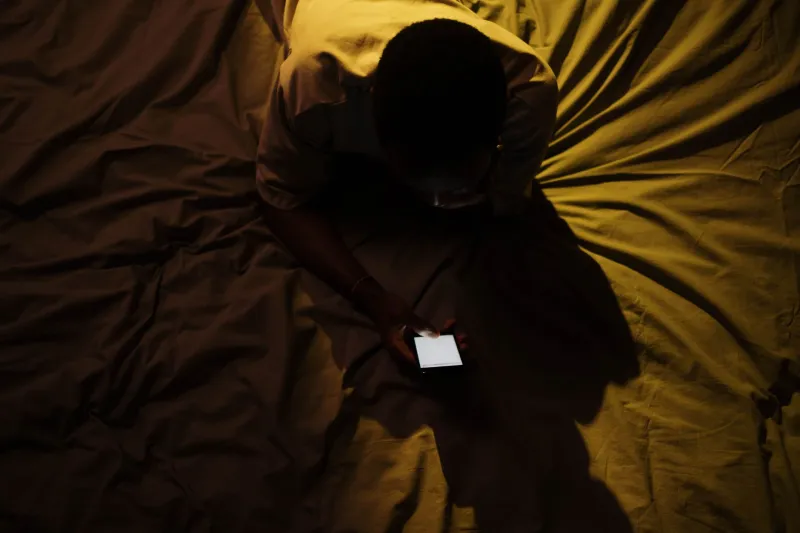
There's a podcast about the architectural history of failed American shopping malls. It releases every other Tuesday, runs about nineteen minutes, and has a Discord server with 84 members who refer to each other by the nicknames the host gave them in episode three. One of those members, a 31-year-old electrician in Tulsa named Marcus, told us he's closer to those 84 people than he is to most of his coworkers. He's met zero of them in person. He's been listening for two years.
"It's not really about the malls," he said. "It was never really about the malls."
Welcome to the loneliness frequency — a specific bandwidth of human connection that lives somewhere between parasocial attachment and genuine community, transmitted in lo-fi audio through your earbuds at 11pm when the rest of the world has gone quiet.
The Math of Micro-Audiences
The podcast industry loves to throw around big numbers. Millions of downloads. Top of the charts. Celebrity hosts with production budgets larger than most indie films. But the more interesting story — the one that actually says something about how Americans are living right now — is happening at the other end of the scale.
Podcasts with audiences under a thousand listeners. Shows that release inconsistently, sound like they were recorded in a closet, and cover topics so specific they'd struggle to fill a high school auditorium with interested parties. Competitive lichen identification. The emotional lives of long-haul truckers. A weekly close-read of a single obscure novel that never finished publishing. These shows shouldn't work. By every conventional metric of media, they should have died in season one.
Instead, they're functioning as primary social infrastructure for a significant number of people who feel, for one reason or another, like the mainstream frequency just isn't broadcasting anything meant for them.
What Parasocial Actually Means When You're Genuinely Isolated
Psychologists have been wringing their hands about parasocial relationships — the one-sided emotional bonds people form with media figures — for decades now. The concern is usually framed around parasocial attachment replacing real connection, a kind of emotional junk food that satisfies the hunger without providing nutrition.
But that framing assumes the alternative is readily available. For a lot of people, it isn't.
Dr. Priya Menon, a social psychologist who studies digital belonging at a research university in the Pacific Northwest, has been tracking what she calls "micro-community formation" around niche audio content. Her preliminary findings suggest that the intensity of attachment in small podcast communities often correlates less with the content itself and more with the listener's broader social context. Put simply: the smaller and weirder the show, the more likely its devoted listeners are experiencing some form of social disconnection in their offline lives.
"There's a self-selection happening," she explained. "People who feel seen by mainstream culture have a lot of options for connection. People who don't, they go looking in the margins. And when they find something in the margins that speaks directly to them — some host who's also obsessed with the thing they're obsessed with, who references the same references, who laughs at the same weird stuff — that recognition is incredibly powerful."
Recognition, it turns out, is the whole product.
The Host as Frequency
Ask devoted listeners of micro-podcasts to describe their relationship with the host and you'll hear language that sounds almost spiritual. "She gets it." "He says the thing I've been thinking but couldn't articulate." "It feels like they made this specifically for me."
This isn't delusion. It's partly just the math of specificity. A podcast about the intersection of disability culture and experimental electronic music is, by definition, not trying to appeal to everyone. The host isn't performing for a mass audience; they're transmitting on a very particular frequency, and the people who receive it clearly are the people it was meant for. The intimacy isn't manufactured. It's structural.
Lena, a 28-year-old graphic designer in Chicago who describes herself as "socially exhausted by existing," has been listening to the same three micro-podcasts for the past three years. She knows the hosts' pets' names, their childhood neighborhoods, their recurring anxieties. She participates in comment threads and Discord servers with other listeners. She considers several of those listeners genuine friends.
"I know that sounds pathetic to some people," she said, without any particular defensiveness. "But I've also had people tell me that going to bars is how you make friends, and I've spent a lot of time in bars feeling completely invisible. So I don't know what the rulebook is supposed to be here."
The Episode as Ritual
One of the weirder things about micro-podcast communities is the ritualistic quality that builds up around listening. Fans develop specific listening habits — always on a walk, always on Sunday morning, always with the same drink — that start to feel almost ceremonial. The episode becomes an event. The release becomes an occasion.
For people whose social calendars are otherwise sparse, this rhythm provides something genuinely valuable: a reliable beat. Something to look forward to. A weekly or biweekly proof that the frequency is still transmitting, that the host is still out there, that the community is still assembled around the same strange signal.
Marcus, back in Tulsa, described the experience of a new episode dropping as "the closest thing I have to a standing appointment with friends." He knows the host has no idea he exists. He knows this is, by some definitions, a strange thing to say. He also knows it's true.
The Question Nobody Wants to Answer
There's an uncomfortable thread running through all of this that's worth pulling on. These micro-communities are providing something real and meaningful for their members. But they're doing it partly because the structures that used to provide that meaning — neighborhood, church, workplace, civic organization — have either collapsed or become inaccessible to a lot of Americans. The podcast didn't create the loneliness. It just found a frequency that the loneliness could receive.
Which means celebrating these communities without also asking what they're compensating for is only half the story.
Dr. Menon puts it plainly: "Audio community is beautiful and it's real and it matters. It's also a symptom. Both things are true and we should probably hold both of them."
Tuning In
Maybe the most honest thing about micro-podcast culture is that it doesn't pretend to be something it isn't. Nobody's claiming these communities replace embodied human contact. Nobody's arguing that listening to a nineteen-minute show about dead malls is the same as having a best friend. The listeners we talked to were remarkably clear-eyed about the nature of what they'd found — a partial thing, a real thing, a thing that mattered even if it couldn't be everything.
That's not delusion. That's just people doing what people have always done: finding the signal in the static, building something small and warm in the middle of a very large and cold world, and tuning in every other Tuesday to remember they're not the only ones listening.
The malls are gone. The Discord is still open. Marcus is already waiting for the next episode.


