Static Is the New Silence: Why Gen Z Is Ditching Wi-Fi for Shortwave Radio
There's a 23-year-old in a Portland apartment who hasn't posted on Instagram in four months. She's not in crisis. She's not on a digital detox retreat that costs $800 and comes with a linen tote bag. She's just... on the radio. Specifically, she's on 14.225 MHz, talking to a retired electrician in rural Georgia about cloud formations and the sound a particular frequency makes when the ionosphere shifts after sunset. His name is Walt. She knows almost nothing else about him. That's the point.
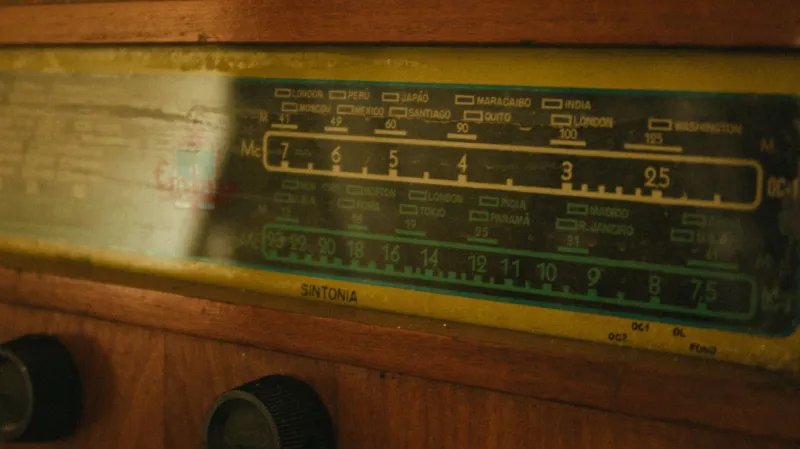
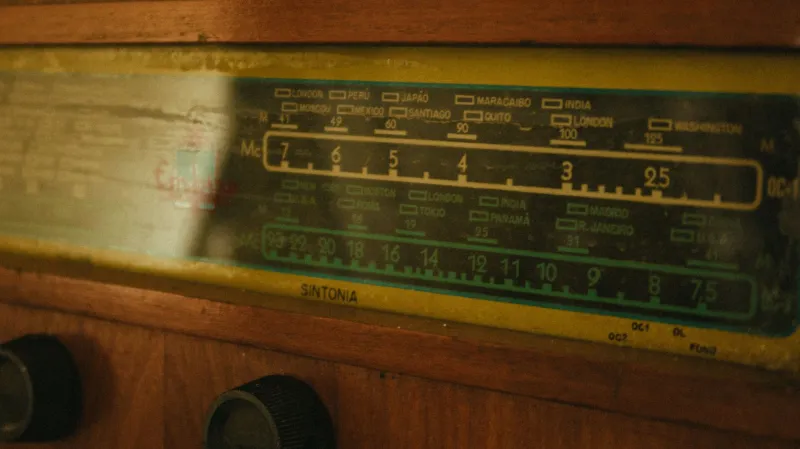
Amateur radio — ham radio, to the uninitiated — has been quietly mutating from a retiree hobby into something that looks a lot like a counterculture movement. Licensing numbers at the FCC have been ticking upward for three consecutive years. Online communities dedicated to shortwave listening are pulling in users who were barely alive when dial-up internet was considered cutting edge. And the aesthetic — the humming transceivers, the hand-drawn antenna schematics, the logbooks filled in pencil — is spreading across corners of TikTok and Tumblr with the same energy that vintage synthesizers had a decade ago.
The question worth asking is: why now?
The Algorithm as Antagonist
To understand the appeal, you have to sit with what people are fleeing. Not just social media in the abstract, but the specific texture of it — the way every interaction is logged, weighted, monetized, and fed back to you as a slightly distorted reflection of yourself. Every search query, every lingering pause on a video, every private message that somehow influences the ads you see tomorrow. The surveillance isn't incidental. It's the product.
Amateur radio offers something structurally different. When you key up a mic on a shortwave frequency, the signal radiates outward in every direction. There's no server receiving it, no company storing it, no engagement metric attached to what you say. The transmission lives in the air for a moment and then it's gone. You can't screenshot it. You can't ratio it. The only record is what you choose to write in your logbook, by hand, if you feel like it.
"It's the only communication technology I use where I genuinely don't know who's listening," says Marcus, a 26-year-old in Chicago who got his Technician license during the pandemic and has since upgraded to General class. "And somehow that feels safer than anything with an app."
That paradox — that the unmonitored feels more secure than the monitored — is the philosophical core of what's happening in the ham radio underground right now.
The Preppers, the Artists, and the Weird Kids in Between
The community that's assembled around this renewed interest is not monolithic, and that's what makes it genuinely strange and worth paying attention to.
On one end, you've got the preparedness crowd — people who learned from hurricane seasons and ice storms and rolling blackouts that cellular infrastructure is about three disasters away from being useless. They're building go-kits, portable radio setups that can operate off a car battery, capable of reaching other operators hundreds or thousands of miles away without a single cell tower in the chain. Their interest is practical, but it's also ideological: they don't trust centralized systems, and they're not entirely wrong not to.
On another end entirely, you've got artists. Sound artists, specifically, who have discovered that the shortwave spectrum is basically a free, infinite, constantly evolving sonic canvas. Stations bleeding into each other across language barriers. Number stations that nobody officially acknowledges. The eerie warble of a signal bouncing off the ionosphere from the other side of the planet. There are musicians building entire albums from recordings made with cheap shortwave receivers, treating atmospheric interference as instrumentation.
And then there's a third category that's harder to name — the weird kids, the ones who found ham radio the same way previous generations found zines or pirate radio or Usenet. They're drawn to the friction of it. The fact that you have to study to get licensed. That the equipment rewards patience and tinkering. That the community has its own dense slang and etiquette developed over literal decades. Entry requires effort, and effort, in an era of frictionless everything, has become its own form of rebellion.
Learning the Language of Interference
Getting into amateur radio isn't instantaneous, and that's not a bug. The FCC requires a written exam for even the entry-level Technician license — 35 questions covering basic electronics, operating regulations, and safety. It's not hard, but it's a commitment. You have to want it.
Once you're in, the learning curve is steep and weird in the best possible way. You start understanding that radio waves behave differently depending on the time of day, the season, the solar cycle. A frequency that carries your voice clearly across three states at noon might bounce all the way to Europe by midnight. The ionosphere is a living thing, constantly shifting, and learning to read it is part of the practice.
"It's the most humbling technology I've ever worked with," says Delia, a 29-year-old sound designer in Los Angeles who got licensed two years ago. "The internet just works or it doesn't. Radio negotiates with the atmosphere. You're always in conversation with something bigger than yourself."
That language — conversation, negotiation, listening — keeps coming up. People who've been in the hobby for decades describe it the same way. There's something about the act of tuning, of searching through static for a signal, that demands a quality of attention that most modern technology actively discourages.
The Frequency as Philosophy
What's emerging, if you squint at it from the right angle, is something that looks like a genuine analog philosophy in a digital world. Not Luddism — most ham operators are also using software-defined radios, digital modes, even satellites. But a conscious insistence that some forms of communication should remain unoptimized. That the static is part of the message. That a signal you have to earn through atmospheric luck and antenna placement and patience carries something that a perfectly compressed data packet doesn't.
There's a word in ham radio culture: QRM. It means interference — specifically, interference caused by other human operators. As opposed to QRN, which is natural atmospheric noise. The distinction matters to radio operators. They've built a whole vocabulary around the difference between human-made chaos and natural chaos.
In 2025, that distinction feels almost unbearably relevant. We're swimming in QRM. Algorithmic feeds, engagement-optimized content, notifications engineered to interrupt at precisely the moment you might otherwise think clearly. The natural static — the actual texture of unmediated experience — is increasingly hard to find.
The people tuning their transceivers at midnight, logging contacts in pencil, arguing about antenna theory on mailing lists that look like they were designed in 1997, are doing something that sounds small but isn't: they're choosing a signal that nobody's selling them.
In the frequency underground, that's what passes for radical. And honestly? It sounds pretty good from here.