The Headliner Is a Rumor: How a Band With No Songs Sold Out a Twelve-Year Tour
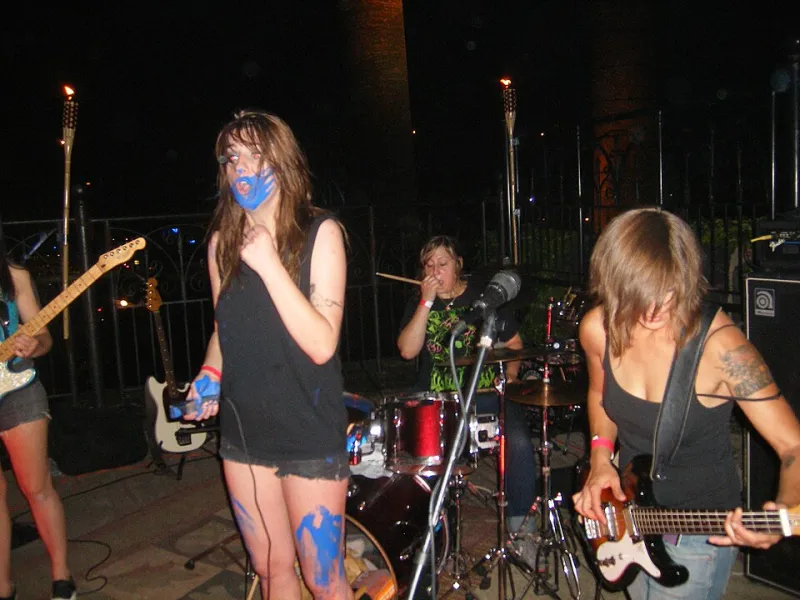
Photo: Bvulpitta, Public domain, via Wikimedia Commons
The merch table is the first thing that tips you off. Hand-screenprinted shirts, a risograph tour poster with a routing map, enamel pins, a zine with typed interviews. Standard stuff — except the band on the shirt has never released a song, has never confirmed a member, and, as far as any public record shows, has never existed.
The name doesn't matter much, so let's call them what the fans call them: the Band. Twelve years ago, a handful of forum posts, a dead MySpace page, and a scanned flyer for a show that never happened congealed into a full-blown mythology — and then the fans started doing something genuinely unprecedented. They started touring it themselves.
What Actually Happens at One of These Nights
I went to a stop in a rented American Legion hall outside Columbus, Ohio, on a Thursday in October. Forty-one people, cash at the door, a folding table with a cooler on it.
There was no band. That's not a metaphor. The evening ran as follows: a local noise duo opened, a poet read a piece allegedly written by the Band's late drummer, and then came the main event — forty minutes in which the audience, together, "performed" a set. Someone played a warped cassette of what may or may not have been a demo. Two people did an interpretive dance to the sound of the room's HVAC system. A guy in a homemade costume read a letter from the Band's fictional manager about a bus breakdown in 2014. Then everyone sang a chorus that does not exist on any recording, and everyone in the room knew the words.
This is the crucial detail. There are no official songs, but there are shared songs — invented at some early gathering, refined over a decade, passed along the way folk songs always were. Ask three attendees about the catalogue and you'll get three slightly different track lists and one shared conviction that they're all correct. The set list is folklore now. Nobody's version is canonical, because there's no canon.
The Tour That Routes Itself
What turns this from a one-off oddity into something worth writing about is the infrastructure. There's a loose touring map, maintained by nobody in particular, that lists which cities "host" a stop and which years they've done it. Cincinnati has run nine. Portland, Oregon, has run four and is considered, weirdly, to be slacking. There's a merch protocol so nobody undercuts anybody else's table. There's an annual "reunion" that everyone acknowledges is a joke and everyone attends anyway.
One host in Chicago told me she books the room a year out, because the shows sell out faster than actual shows by actual bands. She's been doing it since 2017. She has never spoken to anyone claiming to be affiliated with the Band and has no intention of trying. "If somebody showed up with the real thing," she said, "it would ruin it. We don't want the reveal. The reveal is the bad ending."
The Ethics of a Fandom With No Author
Here's where it gets interesting, and a little uncomfortable. Twelve years in, this has become a genuine scene with real money moving through it — door take, merch, the odd paid zine commission — and the thing at the center of it belongs to nobody. That means nobody can say no. There have been fights. Someone tried to trademark the name and had the attempt smothered in a group chat within about six hours. Someone else wrote a 6,000-word fan-canon document, and the response was a collective shrug so pronounced it briefly became a genre of post.
Fans describe the arrangement, unprompted, in the language of open source — an unowned text, a forkable mythology, an IP that stays alive by refusing to be pinned down. It's romantic, and it mostly works, and every few years it nearly falls apart over all the usual things: who gets to be the keeper, who gets paid, who gets the good table.
When the Audience Quietly Becomes the Act
There's a version of this story that's just a punchline about a fake band. That's the lazier read, and it misses the thing that's actually happening. What you have is a decentralized, twelve-year, multi-city durational performance piece that is co-authored by several hundred people who mostly don't use the word "art" and would flinch if you called them artists.
Which, if you think about it, is the most avant-garde outcome available. Nobody commissioned this. Nobody curated it. There's no grant, no press release, no institutional frame. There's just a flyer for a show that never happened, and a group of people in Ohio singing a song that isn't real, together, on a Thursday in October, and doing it again next year in a different city.
The Band has never played. The tour rolls on regardless. If you want a ticket, ask around — someone will know a person, and that person will have a room.