Quiet Costs Extra Now: How a Generation Raised on Noise Is Paying Through the Nose to Hear Nothing
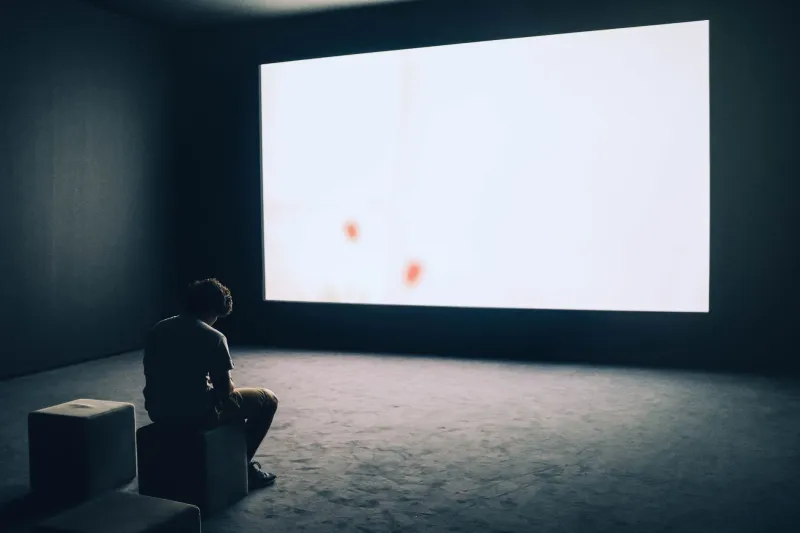
Somewhere in a converted warehouse in Williamsburg — because of course it's Williamsburg — there's a room lined with acoustic foam panels that costs $45 an hour to sit inside. No phone. No music. No ambient hum from a curated lo-fi playlist. Just you, your thoughts, and the faint sound of your own blood moving through your ears. The website calls it "intentional stillness." The waitlist is three weeks long.
Welcome to the silence economy. Population: increasingly, everyone under 18.
The Loudest Generation
Gen Alpha — broadly defined as kids born from 2010 onward — has never known a world without smart speakers, notification chimes, autoplay video, and the particular sonic chaos of a household where every screen is on at once. They came into consciousness alongside the AirPod, the Nest Hub, and the algorithmic content feed that never, ever stops talking.
Researchers at places like the Acoustical Society of America have been quietly (sorry) documenting what constant low-grade noise exposure does to developing brains. Spoiler: it's not great. Chronic noise pollution is linked to elevated cortisol, fragmented attention, and — this one stings — reduced capacity to actually enjoy silence when it finally arrives, because the nervous system has essentially forgotten what to do with it.
So here's the twist: a generation neurologically optimized for constant stimulation is now the primary target market for experiences that offer absolutely nothing. The product is the absence of product. The content is no content. And the price point is aggressively not-free.
Silence as a Subscription Tier
The retreat industry isn't new. Vipassana meditation centers have been offering ten-day silent sits for decades, usually on a donation basis, no frills, no brand identity. What's new is the aestheticization, the gamification, and the frankly wild monetization of the concept for people who might not be old enough to drive.
Companies like Hush Collective (LA-based, very clean sans-serif logo) and Stillform (Austin, naturally) are pitching "micro-retreats" — sessions ranging from 45 minutes to a full weekend — specifically to overstimulated youth and their equally overstimulated parents. Hush's teen package includes a pre-session "sensory audit" where a certified practitioner (certification process: unclear) evaluates your personal noise environment and assigns you a "quiet prescription." That prescription, naturally, is just sitting in a dark room. The audit alone runs $80.
There are apps, too. Apps that sell silence. The irony of using a phone to access silence does not appear to be lost on the developers, who address it directly in their onboarding copy with a kind of cheerful cognitive dissonance. One app, called Nullspace, offers "guided nothingness" — a human voice that tells you, in soothing tones, that there is nothing to hear, and then stops talking. Premium tier unlocks longer sessions of the voice telling you there is nothing. It has 200,000 downloads.
What the Science Actually Says
To be fair, the underlying neuroscience here isn't fake. Silence — real, genuine, not-a-product silence — does measurable things to the brain. A 2013 study published in Brain Structure and Function found that two hours of silence per day prompted cell development in the hippocampus, the region associated with memory and learning. Duke University researcher Imke Kirste, who led that study, was actually trying to prove something else and stumbled onto the finding almost accidentally. The silence was the control condition. The silence won.
Anxiety researchers have similarly documented that quiet environments reduce sympathetic nervous system activation — basically, they help your body remember it's not being chased. For adolescents navigating a world of social media performance metrics and 24-hour news cycles, that physiological reset matters.
But — and here's where PPPHHHAAASSSEEE has to get a little uncomfortable — none of that research suggests you need to pay $45 to a startup to access it. Parks exist. Libraries exist. The inside of your own car at 11pm exists. The science validates silence, not the silence-as-product pipeline.
The Class Frequency Problem
This is where the frequency gets a little dark. Because the communities most saturated in noise pollution — urban neighborhoods near highways, industrial zones, densely packed apartment buildings — are disproportionately lower-income communities of color. The kids who might benefit most from genuine acoustic relief are the least likely to be booking a Hush Collective micro-retreat.
Meanwhile, the retreat experience is being marketed with a language of radical self-care and democratized wellness that papers over a pretty stark access gap. Silence, in this framing, isn't something you find — it's something you purchase. And if you can't purchase it, the implication is that you simply go without. The noise is your problem. The quiet is someone else's amenity.
That's not a wellness revolution. That's just gentrification with noise-canceling headphones on.
The Weird Utopia Nobody's Talking About
Here's what actually interests us, though — the part that feels genuinely strange and worth sitting with: Gen Alpha is the first generation to experience silence as a novelty. For every prior generation, silence was simply what happened when the noise stopped. It was a default state, accessible by accident, stumbled into on long drives or early mornings or the weird dead hour between 3 and 4 AM.
Now it's curated. Now it has a brand. Now it has a waitlist.
There's something almost avant-garde about that, in the most uncomfortable possible way. The absence of signal has become the signal. The gap between the frequencies — the space where PPPHHHAAASSSEEE has always lived, honestly — is now real estate. Someone planted a flag in the void and started charging admission.
Maybe the strangest art project of the decade isn't happening in a gallery. It's happening in a foam-lined room in Williamsburg where a 14-year-old is sitting in the dark, listening to absolutely nothing, having paid $45 for the privilege, and calling it healing.
Is it healing? Maybe. Probably, even, a little bit.
But it shouldn't cost this much to hear yourself think. And the fact that it does tells you everything you need to know about the frequency we're all stuck on right now.